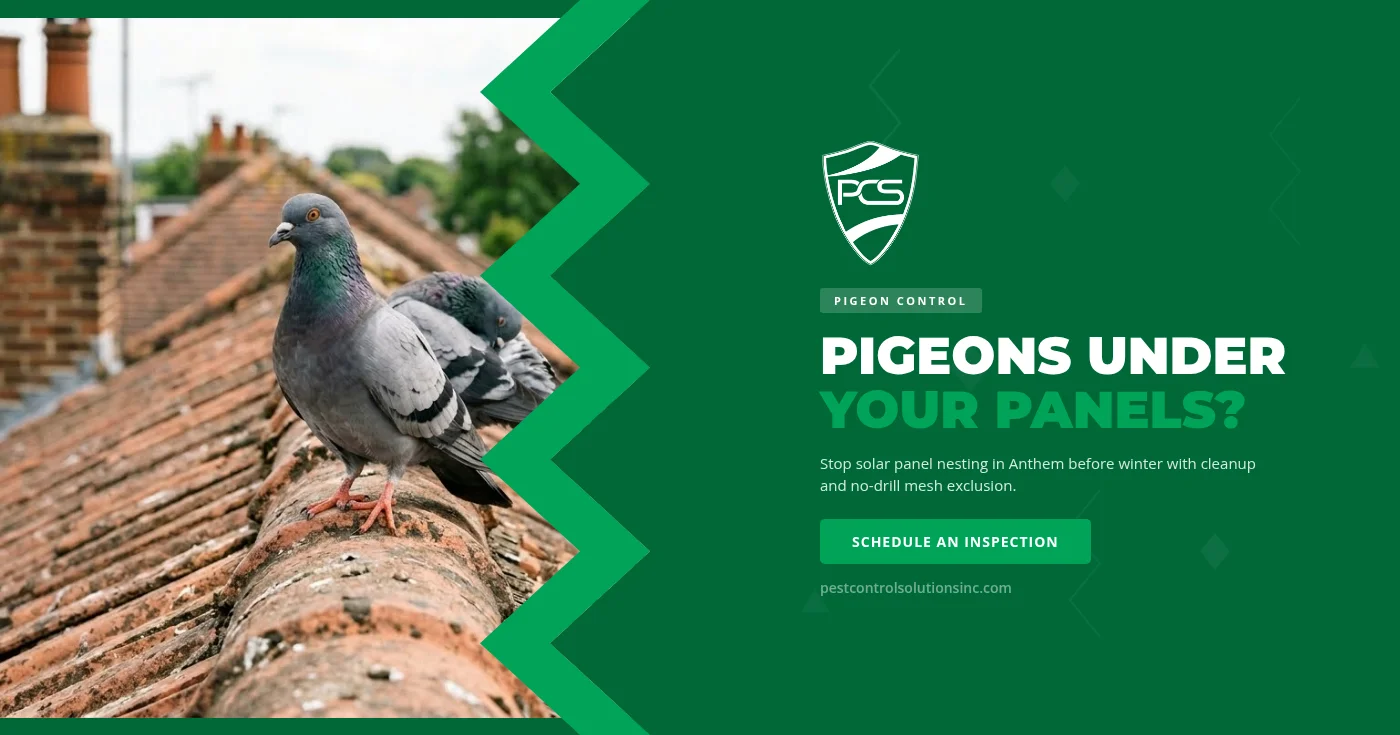
If you’ve heard soft cooing above the ceiling lately or spotted droppings along the gutters, pigeons may have moved in under your rooftop solar panels. As fall nights cool across Anthem, feral pigeons look for sheltered, warmer roosts. The gap beneath a solar array is close to perfect for them. That makes now the right time to think about pigeon control in Anthem, NV, before a few visitors become a winter colony.
Here at CSI, we work on roofs across Henderson, and solar panel nesting is one of the most common bird problems we see once the weather turns. Below, we cover why pigeons head for rooftops in fall and why panels attract them. We also cover the warning signs, the damage and health risks, how professional exclusion works and why late fall is the time to act.
Why Anthem Pigeons Head for Rooftops When Fall Nights Cool Down
Pigeons don’t migrate. The feral pigeons, or rock doves, around the Las Vegas Valley stay all year, so the fall shift you notice isn’t a new flock arriving. It’s local birds changing where they spend the night, looking for roosts that hold heat and block the wind.
November in the valley typically brings afternoons in the upper 60s and overnight lows in the 40s, with colder nights possible late in the month, according to National Weather Service Las Vegas climate data. Our neighborhood sits higher than much of the valley floor, so nights can run a little cooler still. That chill pushes birds off open ledges and light poles and onto rooftops, where trapped warmth and shelter make for a more comfortable night.
Pigeons are also creatures of habit. Their wild ancestors nested on cliff ledges, and a rooftop is the urban version of a cliff. Once a pair settles on a spot, they tend to return again and again, building new nests on top of old material. A roof they discover in October can become their base for the rest of the year. That’s why rooftop pigeon nesting usually gets worse, not better, when it’s left alone.
Why Solar Panels Make Perfect Pigeon Shelters
From a pigeon’s point of view, a solar array is a ready-made shelter. Panels sit several inches above the roof, creating a covered pocket that’s shaded in summer, protected from wind in winter and hidden from hawks overhead. It’s also hard for you to see. Nest material can be packed behind the front row of panels for weeks before anyone notices.
Several features make pigeons under solar panels especially persistent:
- Overhead cover: The panels act like a roof over the nest, keeping eggs and young out of sun and wind.
- Stable surfaces: Tile and shingle under the array give birds a level place to build.
- Easy access: Open edges around the array let birds walk right in.
- Neighborhood clusters: When several homes on a street have solar, birds can hop from roof to roof.
That last point matters. If birds are simply scared off, they’ll look for the next open array nearby, and they often circle back. Real solar panel bird proofing seals the gaps so the shelter is no longer available, and that is what keeps them from returning. Shooing birds away buys a day or two. Closing off the entry points is the lasting fix.
Signs Pigeons Are Nesting on Your Anthem Roof
Because nests under panels are hidden, it helps to know the clues. Most homeowners notice one or more of these before they ever see a nest:
- Cooing or scratching above upstairs rooms, especially early morning and around sunset.
- Birds flying in and out from under the edge of the array or lining the roof ridge.
- Droppings on panels, gutters, window sills, patios and cars parked near the house.
- Twigs, feathers and debris poking out from under the panels or collecting in gutters.
- Overflowing gutters after a rare rain, caused by packed nest material.
- A musty odor near the eaves when droppings have built up.
Feathers or debris under the panels usually mean birds are already nesting. Pigeons can breed in any season and often raise several broods a year, typically two eggs at a time. One pair can become a crowd surprisingly fast.
It’s also worth confirming what kind of bird you’re dealing with. Feral pigeons aren’t protected under the federal Migratory Bird Treaty Act, but many native birds and their active nests are. When we inspect a roof, we identify the species first so our plan follows the rules that apply in Nevada.
The Damage Pigeons Cause: Droppings, Debris, Wiring and Panel Efficiency
A few birds might seem harmless, but a nesting colony wears on your roof and solar system over time.
Droppings and Staining
Pigeon droppings are acidic and build up in thick layers where birds roost night after night. They streak panels, stain tile and stucco, and make a mess of patios, walkways and cars.
Nest Debris and Drainage
Pigeons keep adding twigs, grass and feathers to the same nest. That material traps windblown dirt and leaves and blocks the water path under the array. It can also clog gutters and downspouts, leaving water sitting where it shouldn’t after a storm.
Wiring Concerns
The wiring under your panels wasn’t designed to sit inside a nest. Birds pecking at or disturbing exposed wiring has been reported, though it’s less well documented than the mess. At a minimum, packed nest material around wiring and mounting hardware makes your installer’s inspections and maintenance harder.
Panel Efficiency
Droppings on the glass block sunlight, and dirty panels generally produce less power than clean ones. How much output you lose depends on your system and the amount of buildup. Check your monitoring app and talk with your installer if you notice a dip. Either way, a roof full of pigeons isn’t helping your investment.
Health Risks of Pigeon Droppings Around Your Home
Beyond the mess, built-up pigeon droppings are linked to a few illnesses. The Centers for Disease Control and Prevention describes histoplasmosis as a fungal infection people can get by breathing in spores from soil contaminated with bird or bat droppings. Accumulated pigeon droppings are also associated with cryptococcosis, another fungal infection, and psittacosis, a bacterial one.
The main concern is dust. When dry droppings are swept or scraped, tiny particles can become airborne and get inhaled. For most healthy adults, the risk from small amounts is considered low. It’s higher for people with weakened immune systems, older adults and anyone with lung conditions. If you’re worried about symptoms, your doctor is the right person to ask.
That’s why we don’t recommend climbing onto the roof with a broom. NIOSH and CDC guidance suggests wetting droppings before removal instead of dry-sweeping, and wearing proper respiratory protection for larger buildups. A sloped roof crowded with solar equipment adds its own fall risk.
Pets matter too. Dogs and cats that spend time on patios below a roosting area can walk through droppings. Keeping birds off the roof is the simplest way to cut that exposure and give your household peace of mind.
How Professional Pigeon Control Works: Cleanup, Exclusion and Deterrents
Here at CSI, we treat pigeon problems as a full process, not a one-time scare tactic. A typical job looks like this:
- Inspection: We check the roof, array and nearby ledges to find entry points, count nests and confirm the species.
- Nest and debris removal: We clear nest material from under the panels and around the roof.
- Cleanup: We remove droppings with methods that keep dust down, including wetting material first.
- Exclusion: We install sturdy welded-wire mesh around the perimeter of the array, attached with clips so there’s no drilling into the panels. This solar panel critter guard closes the gap birds use to get underneath.
- Deterrents where needed: For ledges and parapets, we may recommend additional pigeon deterrents for homes, such as spikes or other physical barriers.
Before any work on the array, we suggest checking your warranty with your panel manufacturer or installer. Clip-on mesh is designed not to alter the panels, but your installer can confirm what your coverage allows.
Why DIY Deterrents Fall Short
Plastic owls, reflective tape and ultrasonic devices are popular, but they’re generally considered short-term fixes at best. Pigeons quickly learn that a fake owl never moves. Physical exclusion works because it removes access to the shelter itself. While we’re up there, we also look for openings other pests use. Roof rats like solar arrays for cover too, and our rodent control service can handle that during the same visit.
Why Late Fall Is the Right Time to Pigeon-Proof Before Winter Nesting
Pigeons can nest year-round, but late fall is a smart window to pigeon-proof your roof, for a few practical reasons:
- Birds are choosing winter roosts. Blocking access now keeps your roof from becoming their long-term home.
- Less to clear out. Acting before birds settle in for the winter often means less nest material and fewer young to work around.
- Comfortable roof weather. Mild fall days are ideal for roof work, before winter winds pick up.
- Ahead of spring. Nesting activity often picks up in spring, so exclusion done now means you start the year protected.
Waiting usually makes the job bigger. Each month birds stay, more droppings collect and more nest material gets packed in. More birds also learn your roof is a reliable shelter. Because pigeons return to the same sites, an established colony takes more effort to discourage than a pair that just arrived. You also face more cleanup on your patio and panels in the meantime.
Fall is also a good time for a general pest check. Cooler weather sends plenty of critters looking for shelter. Our home pest control service can help you get ahead of whatever else is trying to move in this season.
Frequently Asked Questions About Pigeon Control in Anthem, NV
How do I keep pigeons from nesting under solar panels in Anthem?
The most reliable approach is exclusion. We clear existing nests and droppings, then install welded-wire mesh around the edge of the array so birds can’t get underneath. Spikes or other physical barriers can help on nearby ledges and parapets where birds like to perch and wait.
Are pigeon droppings on solar panels harmful?
They can reduce output by blocking sunlight, and they stain your roof over time. Built-up droppings are also linked to fungal and bacterial infections when the dust is inhaled, so we recommend professional cleanup instead of dry-sweeping.
Will the mesh damage my panels or leave holes in my roof?
The mesh attaches with clips around the array perimeter, so there’s no drilling into the panels or the roof. We still recommend confirming warranty details with your installer before work begins.
Do you offer pigeon removal in Henderson, NV neighborhoods too?
Yes. We’re based in Henderson and help homeowners across the city with pigeon removal, nest cleanup and rooftop bird proofing. We also work with commercial properties dealing with nesting and roosting birds.
Schedule Pigeon Control in Anthem, NV Before Winter Sets In
Pigeons under solar panels rarely move out on their own, and every week they stay means more droppings, more debris and a bigger cleanup. Scheduling pigeon control in Anthem, NV this fall protects your roof, your panels and your family’s peace of mind before winter nesting takes hold.
Here at CSI, we’re a Henderson-based pest control team serving homeowners and businesses throughout Henderson, and we know the roofs and seasonal patterns of our community. Contact us today to schedule a rooftop inspection, and we’ll put together a plan to clear the nests and keep pigeons out from under your panels.
Who can get pigeons out from under my solar panels before winter?
We can. Pigeons under solar panels are one of the most common bird problems we see once fall nights cool down, and we handle the whole job from inspection to exclusion. Our goal is to clear out the mess and close off the shelter so birds lose their favorite roost.
Here’s what our pigeon control service includes:
- Rooftop inspection to find entry points, count nests and confirm the species before any work begins.
- Nest and debris removal from under the array, around the roof and in gutters.
- Careful droppings cleanup using methods that keep dust down instead of dry-sweeping.
- Solar panel critter guard installation with welded-wire mesh clipped around the array perimeter, with no drilling into your panels.
- Additional deterrents such as spikes or physical barriers for ledges and parapets when needed.
We always recommend checking your warranty with your panel manufacturer or installer before work on the array, and we’re happy to walk you through exactly what we’ll be doing on your roof.
Late fall is an ideal time to act. Birds are choosing their winter roosts now, mild days make for comfortable roof work, and getting exclusion in place before spring means you start the year protected. While we’re up there, we can also look for gaps that let in roof rats and other pests looking for shelter as the weather cools.
Want the full picture on why pigeons move under panels in fall, the warning signs, the damage and health concerns, and how we fix it? Read our complete guide to pigeon control and solar panel nesting.