
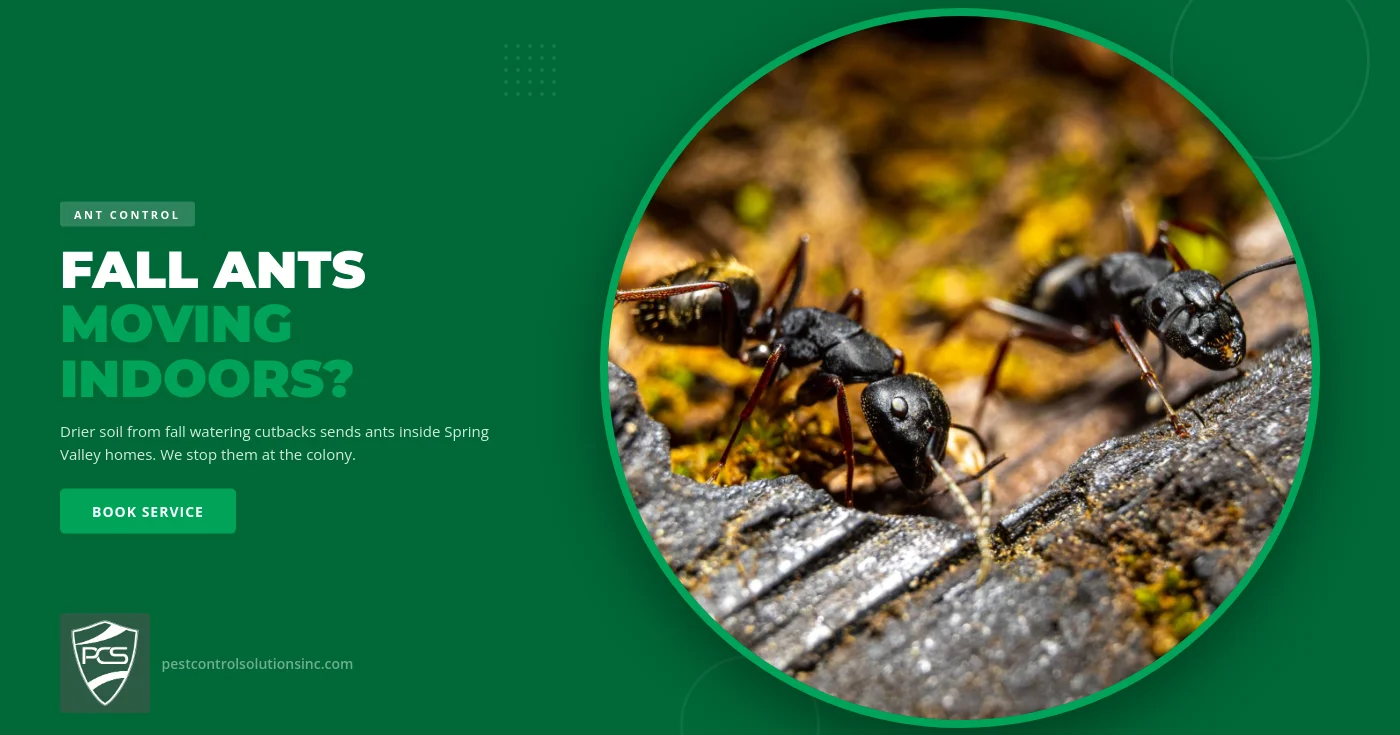
You wiped the counter this morning, and by lunch a thin line of ants is running from the windowsill to the sugar bowl. If that sounds familiar this October, you’re not alone. Searches for ant control Spring Valley NV climb every fall, and the timing isn’t random. As summer fades, conditions outside your home shift in ways that send ants looking for a new source of water and food.
One likely trigger is easy to overlook: the valley’s seasonal watering cutbacks. Fewer irrigation days mean drier soil around foundations, planters and drip lines. For pavement ants and odorous house ants living just outside your walls, the moist, food-filled rooms of homes in Spring Valley start to look very inviting.
Here at CSI, we see this fall pattern every year. In this post, we’ll explain why ants move indoors as watering schedules change, how to identify the ants you’re seeing, where they get in, why sprays often backfire, and what actually works to stop the trail at its source.
Why Fall Brings a Second Wave of Ants to Spring Valley, NV Homes
Most people link ants with spring, when colonies wake up and start foraging. Across the Las Vegas Valley, though, many homeowners see a second surge from late September into November. October highs usually drift from the low 80s into the 70s, which is comfortable foraging weather for ants. The month is also typically close to rainless, so the ground around your home dries out quickly.
Colonies that spent the summer growing are now near their largest. That means more mouths to feed and more workers out searching. When outdoor food sources, such as honeydew produced by aphids on landscape plants, start to taper off, scouts widen their search. Your kitchen is only a short trip from the nearest flowerbed.
Holiday baking, fruit bowls, pet food dishes and kitchen trash add even more draw indoors. A single scout that finds a crumb lays down a scent trail, and within hours dozens of workers can be following it across your floor.
That’s why searches like “ants in house Las Vegas” don’t slow down when summer ends. For many families, fall is the season when a minor nuisance finally becomes impossible to ignore, and when timely fall ant control makes the biggest difference.
How Seasonal Watering Cutbacks Push Ants Toward Your Kitchen and Bathrooms
The Southern Nevada Water Authority sets mandatory seasonal watering days for the valley. Based on its published schedule, fall generally allows up to three assigned days a week, and winter (roughly November through February) drops to a single day. Dates and day counts can change, so check the current SNWA watering schedule for your assigned group before adjusting your timer.
What Drier Soil Means for Ant Colonies
Less frequent watering lets the soil around foundations, drip emitters and planters dry out between cycles. We’re not aware of a study that directly ties SNWA schedule changes to ant activity, so we can’t call it a proven cause. However, university extension services consistently note that ants move indoors looking for moisture and food when conditions outside turn dry. Put those together, and the fall cutback is a very likely contributor to the indoor activity we see each year.
Why Kitchens and Bathrooms Come First
Inside your home, the most dependable moisture sits under sinks, around dishwashers, behind toilets and near shower drains. Ants that follow drip lines toward the house often end up exactly there. If you’re noticing ants in the kitchen after an irrigation schedule change, the colony is usually tracking the closest reliable water, and your plumbing wins.
Identifying the Ants You’re Seeing: Pavement Ants, Odorous House Ants, and Pharaoh Ants
Knowing which ant you’re dealing with matters, because each species responds differently to treatment. These are the three we run into most often in fall.
Pavement Ants
Pavement ants are about 1/8 inch long and dark brown to blackish, with fine grooved lines on the head and thorax. True to their name, they nest under slabs, sidewalks and pavers, and you’ll often spot small piles of soil pushed up through cracks. Ants nesting under pavers and slab foundations in fall are common here, since concrete holds lingering warmth and moisture.
Odorous House Ants
Odorous house ants are also about 1/8 inch and dark brown to black. The giveaway is the smell: crush one and you’ll notice a rotten-coconut odor. According to the University of California IPM Pest Notes on ants, these colonies can have many queens and multiple nests, and they often move indoors when honeydew sources decline or the weather changes.
Pharaoh Ants
Pharaoh ants are tiny, roughly 1/16 inch, and yellowish-tan. They tend to establish inside wall voids and cabinets. They’re also the species most likely to scatter and multiply when treated the wrong way, which brings us to sprays.
Common Entry Points in Spring Valley Stucco Homes, Slabs, and Desert Landscaping
Most homes in our area share a similar build: stucco walls on a concrete slab, surrounded by rock or gravel with drip irrigation. It’s an efficient design for the desert, but it gives ants several easy routes inside:
- Weep screeds: the metal strip at the base of stucco walls can leave a gap between stucco and slab that ants slip right through.
- Slab cracks and expansion joints: pavement ants exploit these, especially in garages and along patios.
- Plumbing and utility penetrations: gaps around hose bibs, AC lines and cable entries.
- Drip lines against the foundation: emitters placed too close to the wall create moist highways straight to the house.
- Door thresholds and sliding door tracks: worn seals are a favorite entry.
- Rock and pavers against the house: stone holds warmth and hides nests right at the wall.
Landscaping projects can stir things up, too. Turf removal under SNWA’s Water Smart Landscapes program and fall overseeding both disturb existing nests. Displaced workers then go looking for a new home, and sometimes they find it inside your wall.
Why Store-Bought Sprays Often Make Fall Ant Problems Worse
When ants show up on the counter, grabbing a can of spray feels like the obvious fix. It kills the ants you can see, and the trail disappears for a day or two. The catch is that foragers are only a small share of the colony. The queens and brood stay tucked away in the nest, untouched, and they simply send out more workers.
The Budding Problem
Repellent sprays can cause bigger trouble with multi-queen species. UC IPM notes that pharaoh ants can respond to repellent products by budding, meaning the colony splits into several new colonies, each with its own queen. Odorous house ants, which already keep multiple nests, may relocate in a similar way when disturbed. Instead of one trail in the kitchen, you can end up with activity in the bathroom, laundry room and garage.
Why Slow-Acting Baits Work Better
Slow-acting baits take advantage of how ants share food. Workers carry the bait back to the nest and pass it to other workers, larvae and the queens. Results usually take several days to two weeks, but the bait reaches the source. Spraying near bait placements can repel workers and undercut the whole approach, so it’s best to keep the two apart.
Fall Prevention Steps to Keep Ants Outside Through Winter
The best fall ant prevention for desert landscaping focuses on removing the moisture, food and access points that draw ants in. Here’s what we recommend:
- Adjust drip emitters so they water plant roots, not the base of your foundation, and keep a dry strip next to the wall where possible.
- Fix leaky hose bibs, irrigation valves and indoor plumbing drips promptly.
- Seal visible gaps around pipes, cables and door thresholds.
- Trim shrubs and ground cover so they don’t touch stucco walls, which ants use as bridges.
- Store pantry items, pet food and holiday baking supplies in sealed containers.
- Wipe counters, sweep floors and take out kitchen trash daily, especially around the holidays.
- Watch for soil mounds pushing up between pavers near the house and let us know if you see them.
These steps won’t eliminate an established colony, but they make your home far less appealing and help any professional treatment last longer. They also discourage other moisture-seeking pests. The same leaks that attract ants draw roaches, which is why we often pair ant work with cockroach control.
How Professional Ant Control in Spring Valley, NV Targets the Colony, Not Just the Trail
Here at CSI, we treat the trail you see as a clue, not the target. As your local ant exterminator, our goal is to find and eliminate the colony feeding it.
Inspection First
We start by identifying the species and following the trail back toward its source, checking weep screeds, slab cracks, irrigation lines and landscaping. Identification shapes everything that follows, because a pavement ant colony under the patio calls for a different plan than odorous house ants nesting in a wall void.
Targeted Baiting and Perimeter Treatment
We place professional baits where foragers are actively feeding so workers carry them home to the nest. Outside, we treat entry points and nesting areas to build a protective barrier. We choose products and placements with kids and pets in mind, and we explain what we’re applying and where.
Follow-Up That Finishes the Job
Multi-queen colonies don’t always collapse after one visit, so we monitor results and adjust as needed. For year-round protection, our home pest control plans help keep ants, scorpions, roaches and other common pests in check season after season.
Frequently Asked Questions About Fall Ant Control in Spring Valley
Why are ants coming inside in October in Spring Valley?
Several factors overlap: drier soil as watering days shrink, colonies at peak size after summer, fewer outdoor food sources and more food out indoors during the holidays. Together, they push foragers toward the moisture and crumbs in your kitchen and bathrooms.
Will the ants go away on their own in winter?
Outdoor activity often slows as temperatures drop, but colonies that settle near warm plumbing or inside walls can stay active. Slab colonies usually return in force come spring, so it’s worth addressing them now.
Is professional ant treatment pet-friendly?
We use targeted bait placements and careful perimeter applications, and we’ll tell you how long to keep pets and kids away from treated areas. Our goal is effective results with peace of mind for your whole household.
How often should I treat for ants?
It depends on your home, landscaping and history of activity. Many homeowners do well with regular seasonal service, but we’ll recommend a schedule after our inspection rather than guess.
Schedule Ant Control in Spring Valley, NV Before Winter Sets In
Fall ant invasions are frustrating, but they’re predictable. As watering days shrink and the soil dries, colonies follow moisture and food straight to your kitchen and bathrooms. Knowing the species, closing off entry points and choosing baits over sprays puts you ahead of the problem.
If ants are already marching across your counters, the CSI team is ready to help. We’re based in Henderson and serve neighborhoods throughout the Las Vegas Valley. For dependable ant control Spring Valley NV families can count on, contact us today to schedule an inspection.
Why are ants suddenly showing up in my kitchen this fall?
Every fall, we hear from homeowners who are surprised to find ants on their counters after a quiet summer. One likely reason is the seasonal drop in watering days. As irrigation cycles shrink, the soil around your foundation dries out, and pavement ants and odorous house ants start following moisture and food indoors, usually straight to kitchens and bathrooms.
Store-bought sprays tend to kill only the ants you can see. Worse, with multi-queen species, repellent sprays can scatter a colony into several new ones. That’s why we focus on the colony itself, not just the trail.
When we visit, we:
- Identify the species so the treatment plan matches the ant you actually have
- Trace the trail back to weep screeds, slab cracks, drip lines and other common entry points
- Place targeted baits that workers carry back to the queens
- Treat the exterior perimeter to build a protective barrier, with kids and pets in mind
- Follow up and adjust until activity is under control
We also share simple steps you can take, like moving drip emitters away from the foundation, fixing leaks and sealing pantry food, so results last through winter. The sooner we address a fall colony, the less likely it is to settle into your walls until spring.
Want the full picture on why ants move indoors as watering schedules change, how to tell the species apart and how to keep them out? Read our complete guide: Fall Ant Control in Spring Valley, NV: Why Ants Move Indoors When Watering Schedules Change.