
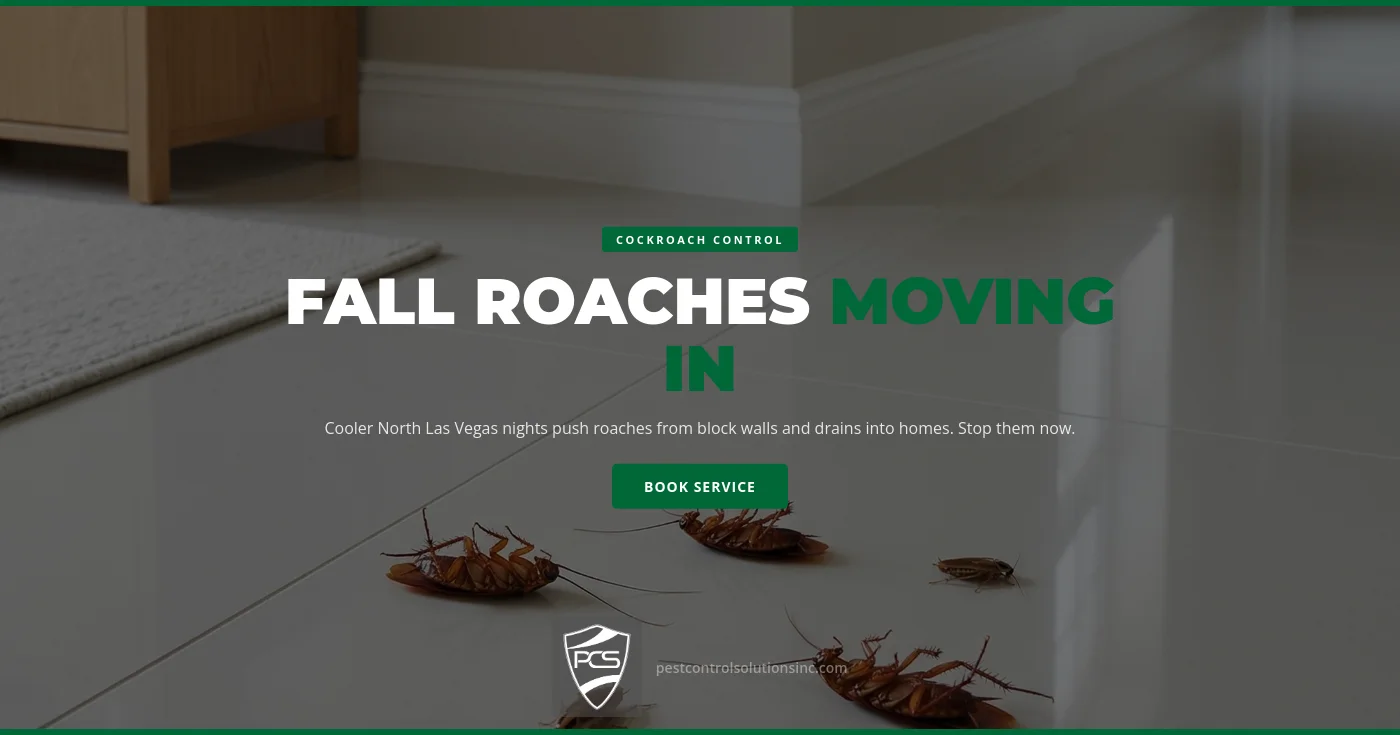
You open the garage on a crisp October evening, flip on the light and watch a reddish-brown roach dart under the water heater. A few days later, another one climbs out of the bathtub drain. Sound familiar? Fall is when many homeowners first look into cockroach control in North Las Vegas. The bugs that lived outside all summer suddenly seem to be everywhere indoors.
It isn’t your imagination. As desert nights cool off, Turkestan cockroaches and American cockroaches leave block walls, irrigation boxes and sewer lines in search of steadier warmth and moisture. Your kitchen, bathrooms and garage offer exactly that.
Below, we explain why October is a turning point, how to tell the two species apart, where they hide, how they get in and which fall cockroach prevention steps work best. We also cover when it’s time to call a professional.
Why October Is a Turning Point for Cockroaches in North Las Vegas
Cockroaches are cold-blooded, so their activity rises and falls with the temperature around them. All summer, valley heat keeps them busy outdoors in moist, shaded pockets around your property. October changes that. Based on typical National Weather Service climate patterns for the area, daytime highs often stay in the 80s while overnight lows slip into the 50s and keep falling as the month goes on.
That day-to-night swing matters. A hollow block wall or shallow valve box that felt cozy in August turns chilly after sundown, so roaches look for shelter that stays warmer and more stable. Homes, attached garages and underground sewer lines all hold heat better than the spots roaches used all summer. No one has pinned down an exact temperature that triggers the move, so think of it as a seasonal pattern rather than a precise switch.
Water plays a role, too. Southern Nevada Water Authority schedules generally allow fewer watering days in fall than in summer, so check the current rules for your watering group. Drier valve boxes and planter beds may nudge moisture-loving roaches toward drains, leaky hose bibs and the damp corners of your home. Put it all together, and October becomes the month outdoor roaches start showing up inside.
Turkestan vs. American Cockroaches: Which One Is in Your Home?
Most of the roaches that wander in during fall belong to two species. Knowing which one you’re dealing with points to where they’re coming from.
Turkestan Cockroaches
Turkestan cockroaches (Blatta lateralis) originally came from Central Asia and, according to University of California IPM, were first detected in the U.S. in the late 1970s. They have since become one of the most common outdoor roaches in the desert Southwest, in many areas replacing the Oriental cockroach. Males are slender, tan to reddish-brown, about ¾ to 1 inch long, with full wings and cream-colored stripes along the wing edges. They fly and are drawn to porch lights. Females are darker, brown to nearly black, with short wing pads and light markings near the edges.
American Cockroaches
American cockroaches (Periplaneta americana) are the big ones, roughly 1½ to 2 inches long, reddish-brown with a pale, figure-8-like band behind the head. When people describe American cockroaches Las Vegas residents find in tubs and laundry rooms, they usually mean “sewer roaches.” These insects live in sewers, storm drains and utility vaults and travel up through drains and cleanouts.
Quick Identification Tips
- Size: Under an inch suggests Turkestan; closer to two inches suggests American.
- Markings: Cream wing stripes point to a Turkestan male; a pale band behind the head points to American.
- Location: Near doors and lights often means Turkestan; near drains often means American.
Where Fall Roaches Hide Outdoors: Block Walls, Irrigation Boxes and Sewer Lines
Before roaches reach your kitchen, they spend months in protected spots around your yard, and valley neighborhoods are full of them.
Hollow Block Walls
The block walls between many backyards are hollow inside. Cracks, weep holes and gaps under the cap give roaches a dark, sheltered highway along property lines. Debris and moisture at the base of a wall, especially where drip lines run nearby, make it even more inviting.
Irrigation Valve Boxes and Water Meter Boxes
Lift the lid on a valve box in late summer and you may find dozens of Turkestan roaches. These boxes stay humid and shaded, and UC IPM lists them among the top outdoor harborage sites. Leaf litter, mulch, pavers and cracked concrete patios serve the same purpose.
Sewer Lines and Storm Drains
American cockroaches favor the sewer system, where temperatures stay fairly steady year-round. As conditions shift, some move up through sewer laterals toward homes. If roaches seem to be coming from municipal lines, the city’s utilities department may accept reports, so check the city website for the current process.
How Cockroaches Get Inside: Drains, Garage Doors and Utility Gaps
Roaches don’t need much room. Young roaches can slip through gaps about as thin as a coin, and adults squeeze through openings you might never notice.
Roaches Coming Up Drains
Here at CSI, roaches coming up drains is one of the most common fall complaints we hear. Every drain has a water-filled trap that blocks sewer gases and insects. In guest bathrooms, rarely used tubs and floor drains in laundry rooms or garages, that water can evaporate quickly in our dry climate. Once a trap dries out, American cockroaches have an open path from the sewer line into your home.
Garage Doors and Entry Doors
Garages are a favorite entry point. Worn bottom seals, gaps in the side weatherstripping and doors left open on warm afternoons let Turkestan roaches walk right in. Boxes, recycling bins and pet food stored in the garage give them places to hide and something to eat.
Utility Gaps and Foundation Cracks
Check where pipes, cables and A/C lines enter the house. Gaps around these penetrations, cracks along slab foundations, loose dryer vents and poorly sealed hose bibs all give roaches a way in.
Fall Prevention Steps North Las Vegas Homeowners Can Take Now
The best fall cockroach prevention combines a few simple habits with some weekend sealing. Here’s what we recommend:
- Keep drain traps full. Run water in unused sinks, tubs and floor drains once a week, and use drain covers or stoppers overnight.
- Seal the garage. Replace worn door sweeps and bottom seals, and keep the garage door closed in the evening.
- Caulk utility gaps. Seal around pipes, cables and A/C lines, and repair foundation cracks.
- Change your lighting. Turkestan males are drawn to light, so turn off porch lights when you don’t need them or switch to yellow bug bulbs.
- Clean up harborage. Rake leaf litter away from block walls, trim plants touching the house and keep mulch a few inches from the foundation.
- Fix leaks. Repair dripping hose bibs, sprinkler heads and under-sink plumbing.
- Store food in sealed containers. This matters most for pet food and pantry items in the garage.
These steps follow integrated pest management (IPM), which the U.S. Environmental Protection Agency describes as combining prevention, monitoring and targeted control rather than relying on sprays alone. The EPA also notes that cockroach droppings and shed skins can trigger allergy and asthma symptoms, especially in children, which is one more reason to stop roaches early. Many of these steps keep ants out, too, so if you’re also seeing trails along the baseboards, our ant control service can help.
When to Call for Professional Cockroach Control in North Las Vegas
Prevention goes a long way, but it can’t reach inside a block wall or down a sewer lateral. It’s time to call for help if you:
- See roaches indoors more than once or twice a week
- Spot roaches during the day, which can signal a larger population
- Find droppings, egg cases or a musty odor in cabinets or the garage
- Keep seeing roaches near the same drain even with a full trap
- Notice both male and female Turkestan roaches around the house
Here at Pest Control Solutions, Inc., we start with a thorough inspection, checking valve boxes, block walls, drains and garage seals to learn where roaches live and how they get in. Then we use targeted treatments such as gel and granular baits placed near outdoor harborage, plus crack-and-crevice applications where needed. We’re always glad to talk through pet and family concerns before we begin.
Timing matters, too. Many homeowners ask about the best time of year for cockroach treatment, and fall is a strong choice because it intercepts roaches before they settle in for winter. When you compare North Las Vegas pest control options, look for ongoing protection. Our home pest control program keeps coverage in place as the seasons change, so the spring warm-up doesn’t bring a fresh wave.
Frequently Asked Questions About Fall Cockroach Control in North Las Vegas
Why am I seeing more roaches in October in North Las Vegas?
Cooler nights push cold-blooded roaches out of block walls, valve boxes and other outdoor spots that lose heat after dark. Your home holds warmth better, so roaches follow it. Reduced fall watering may also send them looking for moisture.
Do Turkestan cockroaches infest homes or just yards?
They mostly live and breed outdoors, but they readily wander inside, especially males drawn to lights. Finding females or young roaches indoors may mean a population is close to your foundation.
How do I stop roaches coming up from floor drains?
Run water in every drain weekly, use covers at night and make sure cleanout caps are secure. If roaches keep appearing, a professional can check for plumbing gaps and treat the surrounding area.
Do roaches die off in winter here?
Not entirely. Activity slows as temperatures drop, but roaches survive in sewers, wall voids and warm spots inside homes. Fall treatment reduces the population that would otherwise ride out winter and rebound in spring.
Stop the Fall Roach Migration Before It Starts
Cooler October nights don’t have to mean roaches in your kitchen. By knowing where Turkestan and American cockroaches hide, sealing the gaps they use and keeping drains full, you can cut down the fall migration considerably. When DIY isn’t enough, professional cockroach control North Las Vegas homeowners can count on makes the difference.
Here at Pest Control Solutions, Inc., we’re based in Henderson and serve homeowners across the Las Vegas Valley. Our CSI team knows the block walls, desert landscaping and drain systems that make roach control here unique. Contact us today to schedule your fall cockroach inspection and enjoy a roach-free season.
How Do I Keep Cockroaches Out of My Home This Fall?
When the nights start cooling off, we get this question more than almost any other. Roaches that spent the summer in block walls, irrigation valve boxes and sewer lines start looking for warmer shelter, and your garage, kitchen and bathrooms are the closest option. Here at Pest Control Solutions, Inc., we focus on stopping that fall migration before it turns into a winter problem.
Our approach starts with finding out where roaches are living and how they’re getting in. During a visit, we:
- Inspect outdoor harborage such as valve boxes, meter boxes, block walls and leaf litter where Turkestan cockroaches gather
- Check drains and cleanouts where American cockroaches climb up from sewer lines
- Look at garage seals, door sweeps and utility gaps that give roaches an easy way inside
- Place targeted gel and granular baits right where roaches live, along with crack-and-crevice treatments when needed
We also share simple steps you can take between visits, like running water in unused drains, switching to yellow porch bulbs and clearing debris away from walls. Combined with ongoing service, these habits give you lasting protection and real peace of mind as the seasons change.
Fall is one of the best times of year to treat, because it catches roaches before they settle in. Want to learn how to tell Turkestan and American roaches apart and where they hide? Read our full guide to fall cockroach control and see how we can help keep your home roach-free.